
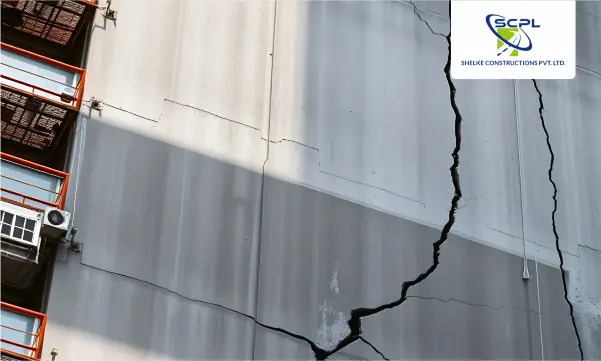
Why Cracks Appear in New Buildings is a question almost every homeowner and society committee asks within the first 6 to 18 months. It feels scary because a “new” building should look perfect, but construction materials behave like living things. They dry, shrink, expand in heat, and settle into the soil slowly. Think of a new building like a new leather shoe. It needs a little time to “set” into its shape, and small creases can be normal. The key is knowing which cracks are harmless “creases” and which are warning signs.
At Shelke Constructions, we explain this early so clients do not panic at every hairline line, but also do not ignore cracks that need attention. This guide on Why Cracks Appear in New Buildings is written for laymen, with common-sense checks and clear examples.
1) The normal cracks: “settling in” and drying
Many cracks in new buildings are not structural failures. They are movement marks that happen as materials dry and the building settles.
A) Plaster shrinkage cracks (very common)
Plaster and putty dry out after application. As they lose moisture, they shrink slightly and can form thin cracks, usually:
- hairline width
- random or fine map-like patterns
- more visible in harsh sunlight or near corners
Metaphor: like mud drying in the sun, it forms fine lines.
B) Concrete shrinkage cracks (common in slabs and walls)
Concrete shrinks as it cures and dries. If evaporation is high, you can get early-age cracking. Plastic shrinkage cracks happen when the surface dries too fast, especially in hot, windy, low humidity conditions.
Metaphor: like the top layer of a cup of tea cooling faster than the inside and forming a skin.
C) Minor settlement cracks
Even with good foundations, soil compresses slightly under load. This can cause small cracks near junctions of different materials, like where a column meets masonry.
2) The “junction” cracks: where two materials meet
A building is a mix of materials, RCC frame, brick or AAC blocks, plaster, tiles, paint. Each behaves differently with heat and moisture. Thermal movement, expansion in heat and contraction in cool periods, is a known cause of cracking, especially on external walls and roofs if movement joints are missing.
Common junction crack locations:
- between RCC columns and brick walls
- near door and window corners
- at the slab-wall joint
- along concealed conduits if plaster is thin
Metaphor: like stitching two different fabrics together, one stretches more than the other, and the stitch line takes stress.
3) The cracks you should take seriously
Here is where Why Cracks Appear in New Buildings becomes important. Some cracks are not cosmetic. They signal movement that can affect safety or water tightness.
A) Wide cracks and cracks that are growing
A practical public guideline used in building crack assessment is that cracks up to around 5 mm are often in “aesthetic” categories, while wider cracks and cracks linked to sticking doors or windows can indicate serviceability issues and need professional review.
Do not treat crack width alone as the only factor, but it is a useful first filter.
B) Diagonal cracks near doors and windows
A diagonal crack running from the corner of a window or door opening can mean stress concentration or settlement. One small diagonal line can be normal. A widening diagonal crack with offset is not.
C) Cracks with dampness, seepage, or rust stains
If you see:
- damp patches following the crack
- water seepage during rain
- white powdery deposits
- rust-colored marks
then the crack is helping water travel, and that becomes a durability problem even if the structure is fine.
D) Cracks with visible displacement
If one side of the crack is higher or pushed out compared to the other side, it suggests movement, not just surface shrinkage.
At Shelke Constructions, we typically advise clients to treat “movement plus symptoms” as the real warning sign: crack plus seepage, crack plus sticking doors, crack plus widening.
4) Quick “homeowner test” to understand a crack
Use these simple steps before you panic:
- Measure and mark it: Use a pencil mark at both ends and note the date.
- Check if it changes: Re-check after 2 weeks and after 1 month.
- Look for patterns: One isolated crack is different from many repeating cracks.
- Check nearby symptoms: seepage, hollow sound, bulging plaster, sticking windows.
- Know the location: external wall cracks and terrace cracks deserve faster attention than a hairline line on an internal paint surface.
Metaphor: like a fever. One reading means little, the trend tells the story.
5) Why good execution reduces cracking, but never makes it zero
Even on well-built structures, some hairline cracking can occur because materials naturally move. What good construction does is:
- reduce the frequency and severity
- control cracking through detailing, curing, and joints
- prevent cracks from becoming leakage paths
Plastic shrinkage cracking risk reduces when the surface is protected from rapid evaporation and proper curing practices are followed.
This is why Shelke Constructions focuses on supervision routines and curing discipline, especially for slabs and terraces.
When to call an expert immediately
Call a qualified engineer or experienced contractor if:
- crack width is increasing over time
- doors or windows are sticking suddenly
- cracks are wider than a few millimetres or you can insert a coin edge easily
- you see seepage, dampness, or rust staining
- there are multiple diagonal cracks around openings
- cracks appear in beams, columns, or load-bearing zones
If you are unsure, it is better to get a quick assessment than to keep repainting over a recurring issue.
FAQs
1) Are cracks in a new building normal?
Small hairline cracks can be normal due to drying, shrinkage, and minor settlement. The trend matters more than a single sighting.
2) Which cracks are usually harmless?
Fine cracks in plaster or paint that do not grow and have no dampness are often cosmetic. They are common near junctions of different materials.
3) Which cracks should worry me?
Cracks that widen, show displacement, cause seepage, or come with sticking doors and windows need inspection. Wider cracks can indicate serviceability issues.
4) Why do cracks appear near windows and doors?
Corners concentrate stress, and slight movement shows up there first. If the crack grows or repeats after repair, it needs a deeper check.
5) Can painting or putty permanently fix cracks?
Only cosmetic cracks. If the crack is caused by movement or moisture, it will return until the root cause is treated.
If you want, I can also write a companion blog for your next topic, “Water Leakage in Slab or Terrace,” in the same layman style with simple diagnosis and repair options.