
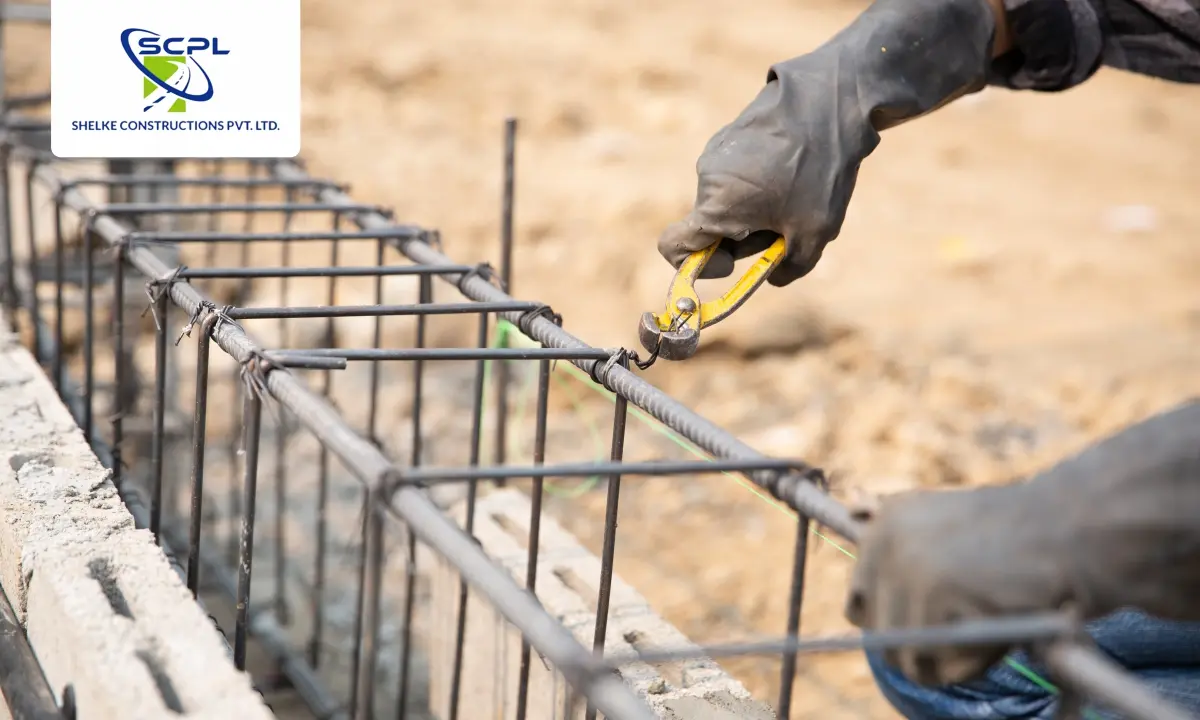
RCC Quality Control Checklist is the simplest way to stop cracks, honeycombing, leakage, rework, and schedule slips before they start. On most sites, quality fails quietly, not loudly. A cover block goes missing, shuttering leaks grout, vibration is rushed, curing is skipped, and the repair bill arrives later with interest. This blog breaks down a practical checklist that site engineers, supervisors, and clients can actually use on real RCC pours.
At Shelke Constructions, the goal is consistent execution across slabs, beams, columns, and footings, not one perfect pour followed by three average ones. This RCC Quality Control Checklist is built around repeatable checkpoints, documented sign-offs, and simple tests that prevent costly rework.
Want to understand how our team plans site execution and quality routines?
Take a quick look at how we work
1) Pre-Pour Planning and Document Control
An RCC Quality Control Checklist begins before steel is tied. Most rework is born from confusion about drawings, levels, pour sequence, and responsibilities.
Drawing readiness
- Latest structural and architectural drawings available on site
- Grid lines, levels, and sections cross-verified
- Revisions are issued clearly and older versions removed from circulation
Method statement and pour plan
- Approved method statement for RCC works
- Pour sequence, placement method, and construction joints are finalized
- Manpower, equipment, and backup arrangement confirmed
Material approvals
- Cement, steel, aggregates, and admixture approvals documented
- Test certificates for cement and steel collected and filed
- Storage areas are dry, covered, and segregated by batch
This early discipline is what Shelke Constructions uses to reduce last-minute site improvisation. Improvisation is the fastest way to violate the RCC Quality Control Checklist without realising it.
2) Reinforcement Checks Before Formwork Close-Up
Steel is the skeleton. Once shuttering closes, mistakes get expensive. A strong RCC Quality Control Checklist catches reinforcement issues while everything is visible.
Bar diameter and spacing
- Main bars, distribution bars, and extra bars match drawings
- Spacing is checked using measuring tape and spacing blocks
- Bars at openings, cut-outs, and re-entrant corners are reinforced as detailed
Laps, anchorage, and development length
- Lap length is as per drawings and placed in correct zones
- Anchorage hooks and bends are correct and properly oriented
- Starter bars are aligned and protected from damage
Stirrups and ties
- Stirrup spacing is verified, including closer spacing zones
- Column ties are closed properly with correct hook bends
- Ties are tight enough to prevent opening during concreting
Cover, chairs, and spacers
- Cover blocks of correct thickness used at all faces
- Chairs are adequate to prevent sag in slabs and beams
- Clear cover maintained at corners and edges, not only on flat faces
Cleanliness
- Steel is free from oil, heavy mud, and loose rust flakes
- Reinforcement is tied firmly to avoid shifting during vibration
If you want a process snapshot of our site checks and supervision flow:
See how our on-site systems are structured
3) Formwork and Shuttering Quality
Formwork defines dimension, alignment, and finish. A good RCC Quality Control Checklist treats shuttering like a structural activity, not carpentry.
Line, level, and plumb
- Beam bottoms, slab levels, and soffits checked with benchmark
- Columns checked for plumb and alignment on all sides
- Dimensions checked with diagonals and tape
Strength and stability
- Props are on firm base plates with adequate bracing
- Shuttering is checked for deflection risk
- Safe access is arranged for placing and vibration
Leak-proof joints
- Joints and corners are sealed to prevent grout loss
- Bolt holes, gaps, and joints are plugged properly
- Release agent applied evenly and not excessively
Surface preparation
- Shuttering is cleaned of debris and old concrete
- Reused shuttering is inspected for dents, warps, and damage
At Shelke Constructions Pvt Ltd, shuttering inspection is a mandatory hold point. Without this, the RCC Quality Control Checklist becomes a paper exercise.
4) Concrete Verification Before Placing
Concrete should arrive as per approved mix design. Your RCC Quality Control Checklist must confirm grade, workability, time, and sampling.
Mix and grade
- Confirm concrete grade and mix design reference
- Verify batch details on RMC challan if using ready mix
- Ensure no uncontrolled water addition at site
Slump test
- Slump tested as per site plan and recorded batch-wise
- Workability is matched to placement method, including pump or chute
Sampling and cube testing
- Cubes taken at planned frequency and labelled correctly
- Cubes cured properly and sent for testing on schedule
- Records maintained for traceability
Timing
- Confirm placing happens within acceptable transport time
- In hot weather, plan for temperature and slump retention measures
Want to see how we maintain batch-wise consistency and documentation?
Explore our quality-led execution approach
5) Concrete Placing and Compaction During the Pour
Execution is where most defects happen. The RCC Quality Control Checklist must be actively used during the pour, not after it.
Pour sequence
- Pouring follows a planned sequence to avoid cold joints
- Layer thickness controlled in columns and walls
- Construction joints formed only where planned and treated properly
Vibration control
- Needle vibrators available with backup
- Vibration done systematically to avoid voids and honeycombing
- Avoid over-vibration that causes segregation
- Vibrator kept away from displacing reinforcement and cover blocks
Finishing and level checks
- Slab levels checked before final set
- Edges and corners compacted properly
- Honeycombing-prone areas supervised closely
Immediate red flags
- Grout leakage from shuttering joints
- Bulging or movement of shuttering
- Segregation, excessive bleeding, or abnormal slump
- Steel shifting that reduces cover
A strict RCC Quality Control Checklist treats red flags as stop-work triggers until corrected.
6) Curing, Protection, and De-shuttering
Curing is the cheapest strength and durability tool. A complete RCC Quality Control Checklist includes curing and safe de-shuttering.
Curing start and method
- Start curing as soon as surface is safe to wet
- Use ponding on slabs where possible
- Use wet hessian wrapping for columns and beams where required
Curing duration
- Follow minimum curing duration as per project plan
- Increase frequency during hot, dry, or windy conditions
Protection
- Protect fresh concrete from rain impact and direct harsh sun
- Prevent early loading on slabs and cantilevers
De-shuttering
- Remove shuttering only after approved time periods
- Remove props in correct sequence, not in haste
- Inspect for honeycombing, cracks, and alignment issues immediately
At Shelke Constructions, post-pour inspection is logged so corrective action is planned early. This is where the RCC Quality Control Checklist closes the loop.
Planning a project and want to speak to an execution-focused team?
Get in touch with us here
Quick RCC QC Workflow You Can Repeat on Every Pour
- Pre-pour drawings, method statement, pour plan sign-off
- Reinforcement inspection, laps, cover, chairs confirmation
- Formwork inspection for line, level, stability, leak-proofing
- Concrete verification with slump test and cube sampling
- Pour supervision with vibration control and level checks
- Curing plan execution and protection
- De-shuttering checks and documentation filing
Use this RCC Quality Control Checklist consistently and RCC performance becomes predictable. Predictability is what protects timeline, budget, and reputation.
FAQs
1) How often should RCC checks be done on site?
Every pour, with hold points before shuttering close-up and before concreting starts.
2) What causes honeycombing most commonly?
Poor vibration, grout leakage from shuttering joints, and congested reinforcement zones.
3) Can we add water to concrete on site?
Only under strict control and recording, and ideally only as per approved process.
4) What is the minimum curing that should never be skipped?
Continuous curing immediately after set and continued as per the curing plan for the project.
5) What should be documented for RCC quality control?
Pour cards, slump records, cube test logs, reinforcement and shuttering checklists, and post-pour inspection notes.