
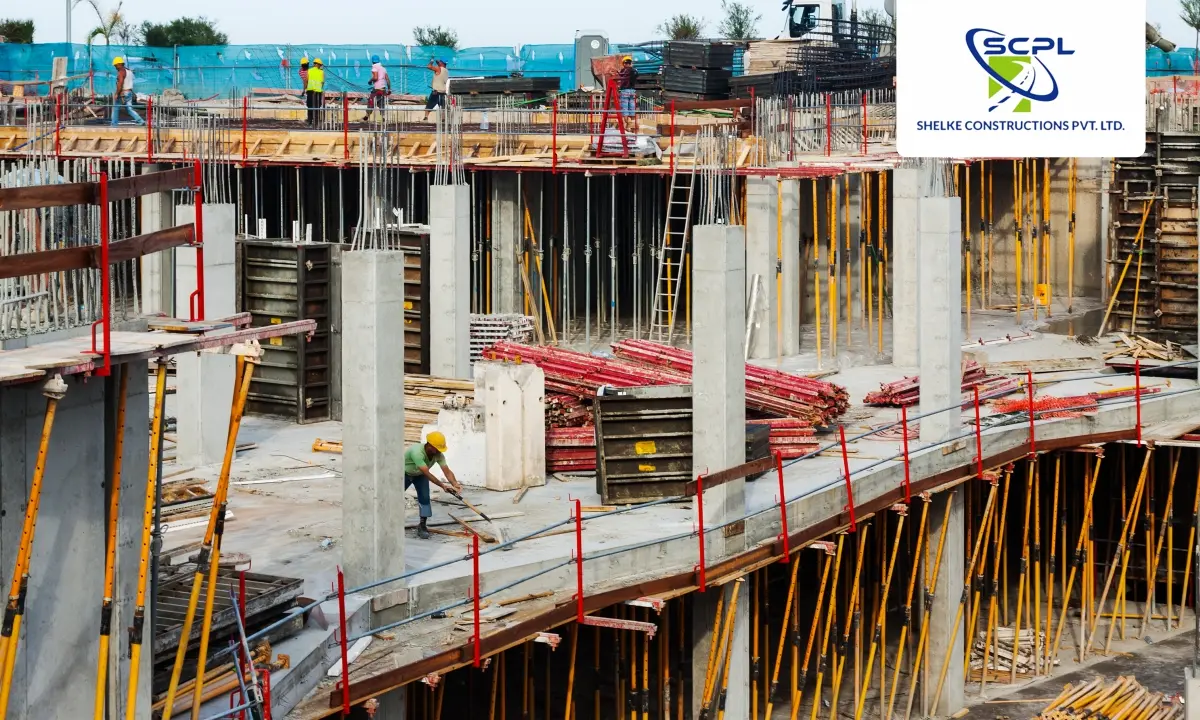
Core and Shell Construction Meaning is one of the most important things to understand before starting a building project. Many clients hear “core and shell” and assume they are getting a nearly ready building. In reality, core and shell usually means the structure and basic building envelope are ready, but the interiors, finishes, services, fixtures, and final usability may still be pending.
Think of it like buying a fully built kitchen space without the appliances, cabinets, lights, and final fittings. The room exists. The base is strong. But it is not ready to cook in yet.
At Shelke Constructions, we believe this clarity must come before costing, because most budget disputes happen when the client expects turnkey delivery but the contractor has quoted only core and shell. This blog explains Core and Shell Construction Meaning in simple terms, including what you get, what you do not get, and what you must confirm before signing a contract.
Want to understand how we define scope and execution stages clearly?
Explore our project approach
What is core and shell construction?
Core and Shell Construction Meaning can be understood as the basic physical structure of a building, completed to a stage where further interior and services work can begin.
The “core” usually refers to the main structural and functional spine of the building, such as:
- foundations
- columns
- beams
- slabs
- staircases
- lift shafts
- service shafts
- structural walls where applicable
The “shell” usually refers to the outer built form or building envelope, such as:
- external walls
- façade readiness
- roof or terrace slab
- basic openings for windows and doors
- external plaster or envelope finish, depending on scope
In simple words, core and shell construction gives you the strong base of the building. It does not automatically give you a finished, usable space.
Why this term causes confusion
The confusion around Core and Shell Construction Meaning comes from one simple problem: there is no single universal scope that everyone follows.
For one contractor, core and shell may include RCC, masonry, external plaster, waterproofing, and basic common areas.
For another contractor, it may include only RCC structure and basic walling.
For a developer, it may mean tenant-ready bare spaces.
For a homeowner, it may sound like “almost ready.”
This is why the phrase must be supported by a written inclusions and exclusions list. Without that, “core and shell” becomes a flexible word, and flexible words create rigid disputes later.
At Shelke Constructions Pvt Ltd, we recommend that clients never approve a core and shell quote only by title. Always read the scope line by line.
What you usually get in core and shell construction
The exact scope depends on the agreement, but here is what is commonly included.
1) Foundation and substructure
This is usually part of core and shell construction.
It may include:
- excavation as per drawing
- PCC below footings
- RCC footings
- columns up to plinth
- plinth beams
- backfilling and compaction
However, excavation complexity, dewatering, rock cutting, and soil improvement may be priced separately if not mentioned.
This is why Core and Shell Construction Meaning must always be linked to soil conditions and foundation scope.
2) RCC frame
This is the heart of core and shell.
It generally includes:
- RCC columns
- beams
- slabs
- staircases
- lift core or structural shaft
- reinforcement steel
- shuttering and scaffolding
- concreting, vibration, and curing
In any building, this stage decides strength, alignment, and long-term performance. At Shelke Constructions, RCC work is handled through stage-wise checks because once concrete is cast, errors become expensive to repair.
3) Masonry or blockwork
Many core and shell scopes include basic walling.
This may include:
- external walls
- internal partition walls
- shaft walls
- parapet walls
- toilet walling and utility spaces
But check carefully. Some scopes may include only external walling and leave internal partitions for the tenant or interior team.
This is especially common in commercial spaces where each occupant wants their own layout.
4) Basic plaster and envelope readiness
Core and shell may include external plaster, internal rough plaster, or only surface readiness. This varies widely.
Typical possibilities:
- external plaster included, internal plaster excluded
- rough plaster included, putty and paint excluded
- façade substrate ready, façade system excluded
- parapet plaster included, waterproofing treated separately
This is one of the biggest confusion points in Core and Shell Construction Meaning.
If a quote says “plaster included,” ask: internal, external, single coat, double coat, rough, finished, or ready for paint?
5) Waterproofing, depending on scope
Waterproofing may or may not be included.
Common waterproofing zones:
- terrace
- toilets
- balconies
- podium slabs
- basements
- overhead tank areas
Do not assume waterproofing is included in core and shell. If it is included, ask what system, what surface preparation, what protection layer, and what testing method are included.
A building can be structurally complete and still leak if waterproofing is treated as an afterthought.
6) Basic common circulation
Core and shell may include:
- staircase RCC
- lift shaft civil work
- service shaft openings
- lobby structure
- basic corridor structure
But finishes may be excluded. That means staircase tiles, railings, lighting, lift installation, lobby flooring, and painting may not be part of the core and shell package.
What you usually do not get in core and shell construction
Understanding what is excluded is even more important than understanding what is included.
1) Interior finishes
Core and shell usually does not include:
- flooring
- wall putty
- painting
- false ceiling
- partitions
- decorative wall finishes
- modular furniture
- kitchen counters
- wardrobes
- interior carpentry
Metaphor: core and shell gives you the body of the car. Interiors are the seats, dashboard, music system, and comfort features.
2) Final electrical work
A core and shell scope may include conduits, sleeves, or shafts, but usually does not include full electrical finishing.
Often excluded:
- final wiring
- switches and sockets
- light fixtures
- fans
- DB finalisation
- decorative lighting
- appliance points as per interior layout
Always clarify whether electrical work means “provision” or “complete working system.”
3) Final plumbing and sanitary fittings
Plumbing exclusions may include:
- CP fittings
- sanitaryware
- geyser points
- final fixtures
- shower partitions
- bathroom accessories
- kitchen sink and fittings
A contractor may include vertical plumbing lines but not final toilet finishing. This distinction matters.
4) HVAC, fire, lift, and special services
In many projects, core and shell excludes full MEP systems.
These may be separate:
- lift supply and installation
- HVAC ducting and units
- firefighting systems
- fire alarm systems
- CCTV and access control
- DG, UPS, or backup systems
- STP and WTP
- solar systems
For commercial, hospital, institutional, and industrial buildings, these services can form a major part of the final cost. If they are not planned early, they cause hacking, rework, and cost escalation.
Want an execution model that coordinates civil and services from the start?
Explore our services
5) External development and landscaping
Core and shell may not include:
- compound wall
- gate
- paving
- landscaping
- external lighting
- stormwater drains
- parking markings
- signage
- security cabin
This surprises many clients because they imagine the site as fully finished from outside.
Core and shell vs turnkey: the clean difference
The simplest way to understand Core and Shell Construction Meaning is by comparing it with turnkey.
Core and shell means the building is structurally ready and prepared for further work.
Turnkey means the building is ready to use, as defined in the contract.
In core and shell, the client may still need to appoint:
- interior contractor
- electrician
- plumber
- HVAC team
- lift vendor
- painter
- furniture team
- façade or glazing agency
In turnkey, one contractor or one execution team takes responsibility for a larger package.
Neither model is automatically better. Core and shell gives flexibility. Turnkey gives single-point accountability.
When core and shell is a smart choice
Core and shell works well when:
- tenants will design their own interiors
- the client wants to phase spending
- the project is for leasing or commercial handover
- interior layouts are not final yet
- multiple users will occupy different spaces
- the developer wants a standard handover stage
For example, if you are constructing a commercial building where each office buyer will customize their own interiors, core and shell can be the right model.
When core and shell can create problems
Core and shell becomes risky when:
- the client expects a finished building
- MEP coordination is not planned
- waterproofing is unclear
- handover stage is not defined
- future agencies damage completed civil work
- exclusions are not written properly
For example, if conduits are not planned before plaster, the electrical team may later cut walls. If plumbing shafts are not coordinated, toilets may need redesign. If terrace waterproofing is excluded, leakage disputes may start later.
At Shelke Constructions, we prefer defining the exact handover condition so the next stage can begin without confusion.
Questions to ask before approving a core and shell quote
Use this checklist:
- Does the scope include foundations and excavation?
- Is RCC structure included fully, including steel, shuttering, concrete, and labour?
- Are internal and external walls included?
- Is plaster included? If yes, what type?
- Is terrace and toilet waterproofing included?
- Are windows, doors, railings, and grills included?
- Are electrical and plumbing only provisions or full systems?
- Are lifts, fire systems, and HVAC included or excluded?
- Are external works like paving and compound wall included?
- What exactly is the handover stage?
If these answers are written clearly, you will understand the real Core and Shell Construction Meaning for your project.
Final takeaway
Core and Shell Construction Meaning is simple once you remove assumptions. You get the structural body and basic building readiness. You usually do not get final interiors, fixtures, services completion, and ready-to-use finishing unless they are clearly included.
The smartest thing a client can do is not ask, “Is this core and shell?” but ask, “What exactly do I get at handover?”
That one question can save lakhs in confusion, delays, and rework.
FAQs
1) What is core and shell construction in simple words?
Core and shell construction means the main structure and basic building envelope are completed, but interiors and final services are usually not finished. It is a ready-for-next-stage building, not necessarily a ready-to-use building.
2) Does core and shell include waterproofing?
Sometimes yes, sometimes no. Terrace, toilet, basement, and podium waterproofing must be specifically mentioned in the scope to avoid disputes.
3) Are electrical and plumbing included in core and shell?
Usually only basic provisions, shafts, sleeves, or conduits may be included. Final wiring, fixtures, sanitaryware, and complete working systems are often separate.
4) Is core and shell cheaper than turnkey construction?
The initial cost is usually lower because fewer items are included. But the total project cost may rise later when interiors, services, finishes, and external works are added.
5) Who should choose core and shell construction?
It works well for commercial buildings, rental spaces, and projects where tenants or owners will handle their own interiors later. It is also useful when the client wants to phase spending.
6) What is the most important thing to check in a core and shell contract?
Check the inclusions, exclusions, and handover definition. The contract should clearly state what is completed and what remains for the next agency.