
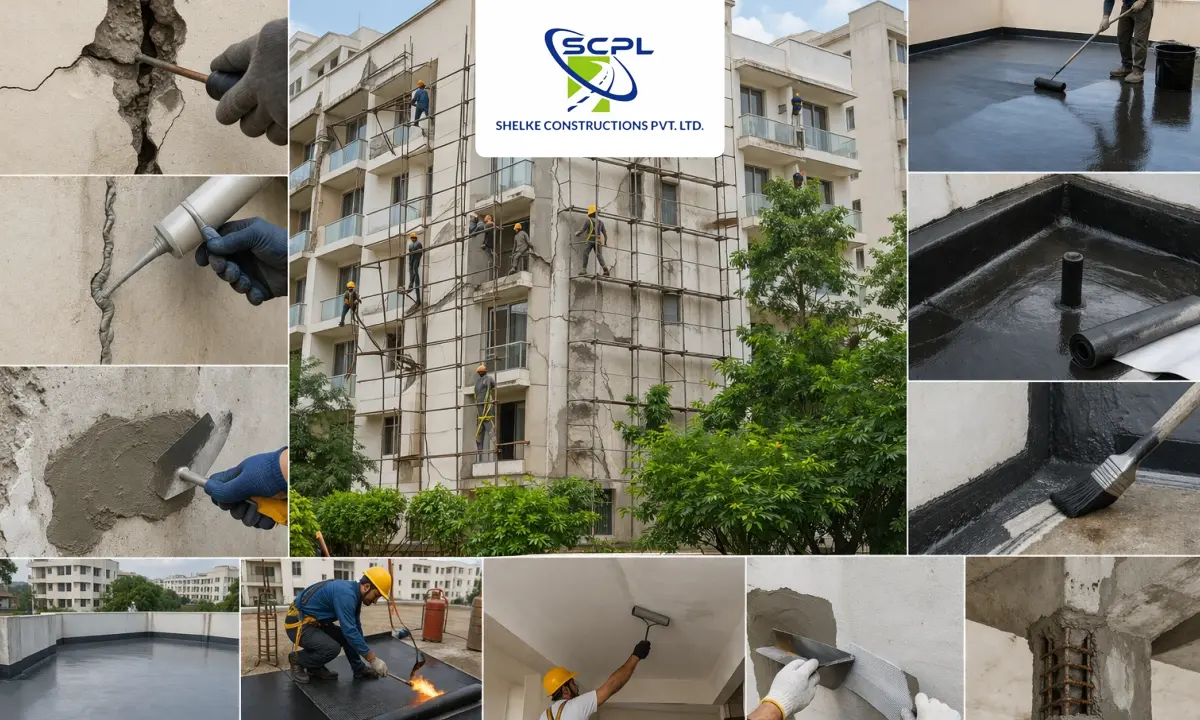
Society Repair Work Guide is something every housing society needs, because repairs are not just “fix the leakage and paint.” If you treat repairs like cosmetic touch-ups, the same seepage returns, the same plaster falls again, and the society ends up paying twice. Real repair work is like healthcare. You diagnose first, then choose treatment, then follow maintenance. This Society Repair Work Guide covers waterproofing, structural repairs, and a clear planning method that society committees and residents can actually follow.
At Shelke Constructions, society repairs are handled with a step-by-step approach: inspection, scope definition, execution method, and documentation, because societies need predictable outcomes, not recurring patchwork.
1) First, stop calling everything “repair” and separate the problems
A strong Society Repair Work Guide starts by separating three categories. Each category has a different solution.
A) Waterproofing issues (water is entering)
Examples:
- terrace leakage into top-floor flats
- bathroom seepage to lower flat
- external wall dampness during rain
- planter leakage near balconies
- podium or parking slab leakage
B) Structural distress (movement or steel corrosion risk)
Examples:
- spalling concrete with exposed steel
- rust stains and repeated cracking at beams or columns
- sagging slabs, unusual vibrations
- settlement cracks that keep growing
C) Cosmetic defects (surface-level)
Examples:
- minor plaster cracks without dampness
- paint peeling due to sun exposure
- damp patches from plumbing condensate, not active leakage
If a society treats structural distress like cosmetic repair, it becomes a safety risk. That is why this Society Repair Work Guide begins with diagnosis.
Want to discuss how to structure a repair scope before tendering?
Connect with our team here
2) Waterproofing: the most common society problem
Most societies begin their Society Repair Work Guide journey because of water leakage. Water is not just nuisance. It causes long-term damage:
- corrodes reinforcement steel
- weakens plaster and concrete
- creates fungus and indoor air quality issues
- increases repair cost every monsoon
Common waterproofing zones in societies
- terrace and overhead slab
- external walls and window bands
- balconies and chajjas
- toilets and wet areas inside flats
- parking slab or podium
- expansion joints and construction joints
The biggest mistake: “coat it and forget it”
Waterproofing systems are only as good as surface preparation and detailing. If you simply apply a coating over loose plaster, cracks, and unsealed joints, it is like applying tape over a leaking pipe. It holds for a while, then fails again.
What good waterproofing planning includes
- identify where water enters, not where it shows up
- check slopes, drain outlets, and ponding points
- seal cracks and joints properly
- choose system based on exposure, not price
- do a water pond test where applicable
- protect the waterproofing with screed or tiles as required
At Shelke Constructions, waterproofing is treated as a complete system: surface prep, application, detailing, and protection, because the weakest detail decides the result.
Want to see how we plan waterproofing and execution staging?
Explore our approach
3) Structural repairs: when you must not “delay till next year”
In a Society Repair Work Guide, structural repairs are the category that should get top priority because delays can increase cost and risk.
Signs that structural repair may be needed
- concrete cover falling off and steel bars visible
- rust stains running down from beams or columns
- repeated cracks at the same structural line
- dampness that keeps returning at beam-column junctions
- hollow sounding plaster with deep delamination
What structural repair usually involves
- chipping loose concrete to reach sound substrate
- cleaning reinforcement and removing rust properly
- applying corrosion protection systems
- rebuilding section with repair mortar or microconcrete
- curing and finishing
- sometimes adding strengthening measures if needed
This work needs supervision and method statements. Random patching can trap moisture and speed up corrosion.
At Shelke Constructions Pvt Ltd, structural repair is handled with disciplined steps and documentation so the society can track where repairs were done and why.
4) How to plan society repair work without chaos
Society repair fails most often because of planning gaps: unclear scope, unclear access, unclear resident coordination, and unclear finances. A good Society Repair Work Guide includes a management plan, not only technical steps.
Step 1: Appoint a technical inspection
Before tendering, do a building survey:
- map leakage locations and likely sources
- identify structural distress areas
- check terrace slopes, rainwater pipes, drainage
- review previous repair history and failure points
This creates a scope document. Without a scope, tenders are meaningless comparisons.
Step 2: Decide repair priorities and phasing
Not everything must happen at once. Prioritize:
- structural distress and safety risk
- waterproofing zones that cause active leakage
- external plaster and painting
- cosmetic works
Phasing helps cash flow and reduces resident disruption.
Step 3: Create access and safety plan
Society work means people are living inside while work happens.
- scaffolding safety and netting
- barricading and signage
- working hours and noise plan
- debris disposal and dust control
- electrical safety and temporary arrangements
A good contractor will present a site safety plan, not just a rate quote.
Step 4: Tender the right way
This is critical in the Society Repair Work Guide:
- give all bidders the same scope and BOQ format
- insist on method statements for waterproofing and structural repair
- compare materials, systems, warranty, and exclusions
- check if surface prep and protection are included
- evaluate contractor supervision and manpower plan
The lowest quote is often low because it excludes preparation, protection, or testing.
Step 5: Lock documentation and warranty terms
Your agreement should cover:
- stage-wise inspection points
- material brands and system specification
- testing requirements like pond tests
- workmanship warranty and system warranty clarity
- variation handling method
At Shelke Constructions, we strongly recommend clear documentation for societies because committee changes happen, but records remain.
5) Execution: what a good repair site should look like
During execution, a Society Repair Work Guide must protect residents and ensure quality.
For waterproofing works
- surface must be cleaned, repaired, dried as required
- joints and cracks are detailed, not ignored
- application is done with thickness control
- curing and protection are done properly
- testing is done before final finishing
For structural repairs
- damaged areas are identified and opened fully
- steel is cleaned and treated properly
- bonding agents and repair systems are applied as per method
- repairs are cured and checked, not rushed
- final finishing matches the original cover and profile
For external painting
Paint is only as good as base preparation.
- loose plaster must be repaired
- cracks treated
- primer and correct paint system applied
- weather windows planned to avoid monsoon failure
Metaphor: painting on a weak wall is like putting perfume on damp clothes. It masks for a while, then the smell returns.
6) After repairs: maintenance is the difference between 2 years and 8 years
A society that follows this Society Repair Work Guide will also set up maintenance practices:
- clean terrace outlets and drain mouths before monsoon
- check and clear rainwater downpipes
- stop water ponding on terrace and balconies
- avoid drilling into waterproofed areas without sealing
- schedule annual inspection of repaired zones
Repairs are not a one-time event. They are a lifecycle.
FAQs
1) How do we know if the leakage is from terrace or external wall?
Track leakage timing. Terrace leakage often increases after rain and affects top floors, while external wall seepage shows on wind-facing sides.
2) What is the best waterproofing for society terrace?
It depends on slope condition, existing surface, and exposure. A good contractor will recommend a system after inspection, not before visiting.
3) When should we worry about structural cracks?
When cracks keep growing, show rust stains, or appear on beams and columns. If concrete is falling and steel is exposed, treat it as urgent.
4) How long do society repair works usually take?
It depends on scope and phasing. Terrace waterproofing and external works often run in weeks, while major structural repairs and painting can run longer.
5) How should societies compare contractor quotations?
Compare scope, method, material system, preparation steps, testing, warranty, and supervision plan. Cheapest is not best if prep is missing.
6) How do we reduce resident complaints during repairs?
Create a clear schedule, safe access plan, dust control, and communication routine. Predictability reduces friction more than promises.