
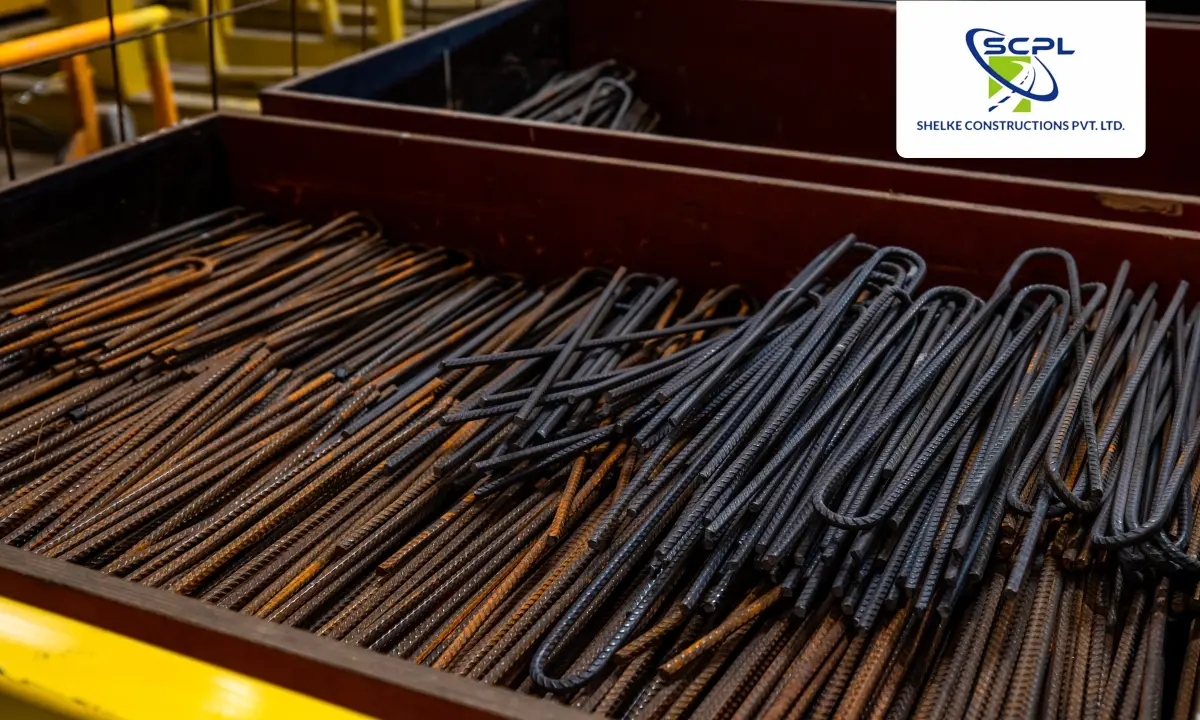
Bar Bending Schedule (BBS) Explained is one of the easiest ways to understand how good construction teams control steel, reduce waste, and keep RCC work predictable. If concrete is the “body” of a structure, steel is the “skeleton,” and steel costs can quietly swing your budget if it is not planned properly. A Bar Bending Schedule is basically the steel plan written in a way that site teams and fabricators can actually execute.
At Shelke Constructions, BBS is treated as a control tool, not paperwork. When BBS is done right, steel ordering becomes accurate, cutting and bending becomes faster, wastage drops, and the site avoids last-minute “we are short of steel” chaos. This blog breaks down Bar Bending Schedule (BBS) Explained in simple terms, with real benefits you can feel on site.
What is a Bar Bending Schedule in simple words?
Bar Bending Schedule (BBS) Explained in the simplest way: it is a list that tells you exactly what steel bars are needed, where they go, what diameter they are, what length they must be, how they must be bent, and how many pieces are required.
Instead of saying “put reinforcement in slab,” BBS says:
- 12 mm bars
- length 3.8 meters
- shape code with bends
- quantity 52 numbers
- total weight calculated
Metaphor: BBS is like a shopping list with exact quantities and sizes, not “buy vegetables.” If you shop without a list, you overspend or run short.
Why BBS matters more than people think
Steel is one of the biggest cost drivers in RCC work. If you do not control steel, you do not control RCC budget. Bar Bending Schedule (BBS) Explained properly shows three big benefits:
1) It controls steel quantity
Without a BBS, steel is ordered with rough estimates. Rough estimates create either:
- shortage and work stoppage
- excess steel lying unused (money stuck)
2) It reduces wastage
Steel wastage happens due to:
- random cutting without planning
- wrong lengths cut
- bad lap placement leading to extra consumption
- poor storage and damage
- over-ordering because the site is unsure
A good BBS reduces “guess cuts.” It makes cutting systematic.
3) It improves site speed
When bending and cutting is planned:
- bar cutting yard works faster
- binding teams get ready bundles
- slab and column reinforcement placement becomes smoother
- fewer interruptions happen during shuttering closure and pour preparation
At Shelke Constructions Pvt Ltd, BBS is a planning lever that helps both cost and timeline stay predictable.
What a Bar Bending Schedule typically includes
When you hear Bar Bending Schedule (BBS) Explained, expect these main columns:
- Bar Mark: ID for each bar type
- Member / Location: slab, beam, column, footing, staircase
- Bar Diameter: 8, 10, 12, 16, 20 mm etc
- Spacing: like 150 mm c/c or quantity count
- Cutting Length: exact length to cut before bending
- Shape Code: the bending shape reference
- No. of Bars: how many pieces
- Length per Bar: in meters
- Total Length: quantity x length
- Unit Weight: as per diameter
- Total Weight: weight in kg or tonnes
For a client, you do not need to calculate everything yourself. You need to know that the BBS creates traceability and prevents “steel is missing” stories.
How BBS controls cost on a real project
Bar Bending Schedule (BBS) Explained becomes real when you see how it impacts purchase and billing.
A) Accurate procurement
BBS helps you order steel in planned lots. That means:
- fewer urgent purchases at higher rates
- lower risk of buying extra “just in case”
- better stock management
B) Better rate comparison
When BBS is clear, contractors can quote more accurately. When BBS is missing, some quotes look cheaper because steel is under-assumed. Later it comes back as “extra steel required.”
C) Fewer on-site variations and disputes
Many disputes happen when clients ask “why so much steel?” and contractors respond with general answers. A BBS gives a professional basis to explain consumption based on drawings and design.
At Shelke Constructions, we prefer BBS-led planning so the client sees the logic behind steel consumption, not only the bill value.
Want a project plan where cost logic is documented and transparent?
Get in touch here
Where BBS saves the most waste
If you want Bar Bending Schedule (BBS) Explained as a waste saver, these are the main areas:
1) Cutting optimisation
BBS allows cutting patterns that reduce leftover lengths. Instead of cutting randomly, you cut in a way that offcuts are usable for other bars.
Metaphor: like cutting a pizza. If you cut randomly, some slices are too big, some too small, and you waste. If you plan, everyone gets equal slices and nothing is left awkwardly.
2) Correct lap planning
Wrong lap lengths and wrong lap zones can add steel. BBS aligns lap lengths and locations to structural requirements, reducing unnecessary extra.
3) Preventing wrong bends
Wrong bend angles and shapes cause rejection and rework. BBS specifies bend shapes clearly so fabricators follow a standard.
4) Better storage and handling
When bars are marked and bundled as per bar marks:
- steel doesn’t get mixed up
- fewer bars get damaged
- site teams don’t “lose” bars in the pile
What can go wrong with BBS (and how to catch it)
Bar Bending Schedule (BBS) Explained also needs a reality check. A BBS is only as good as the drawings and the discipline to follow it.
Red flag 1: BBS doesn’t match latest drawings
If drawings have revisions, BBS must be updated. Otherwise you cut steel for an old design.
Red flag 2: Cutting length not considering bends and hooks
Bending allowance matters. If it is ignored, bars come short.
Red flag 3: Site improvisation
If teams start cutting “as per site feel” instead of bar marks, BBS benefits disappear.
Red flag 4: No bar marking on site
If bar marks are not maintained physically on bundles, everything becomes confusing.
A simple client-friendly check: ask to see bar marks and bundles before slab work. If the yard looks organised, the steel process is probably under control.
How BBS connects to quality (not only cost)
Most people think BBS is only about saving money. But Bar Bending Schedule (BBS) Explained properly also protects quality:
- correct spacing reduces cracking risk
- correct cover and bar placement improves durability
- correct anchorage and development lengths improve structural performance
- correct stirrup spacing improves shear capacity in beams and columns
So BBS is a quality control tool disguised as a spreadsheet.
A quick summary you can remember
If you want the fastest takeaway from Bar Bending Schedule (BBS) Explained:
- BBS turns drawings into executable steel instructions
- It controls steel quantity, reduces wastage, and improves speed
- It reduces budget shocks and billing disputes
- It supports quality through correct placement and detailing
At Shelke Constructions, this kind of planning discipline is what keeps RCC execution predictable.
FAQs
1) Is BBS required for every project?
For meaningful RCC works, yes. Even small projects benefit because steel is a major cost and BBS reduces guessing.
2) Does BBS reduce steel quantity or only reduce waste?
It mainly reduces waste and prevents over-ordering, while ensuring steel is placed as per design. It also reduces “extra” steel used due to wrong laps and random cutting.
3) Can BBS change during construction?
Yes, if drawings change or site conditions require revisions. The key is version control so the site always follows the latest schedule.
4) Who prepares the BBS?
It is typically prepared by the contractor’s engineering team, structural detailers, or consultants, based on approved structural drawings.
5) How can a client verify that BBS is being followed?
Ask to see bar marks and bundling in the cutting yard and compare with the slab or beam reinforcement placement. Organised bar marking and matching quantities are good signs.